Port St. Lucie is popular precisely because it's more affordable than South Florida — but "affordable" still means planning for more than a mortgage. Here's an honest look at what shapes your monthly cost of living in PSL in 2026, from housing and property taxes to the Florida reality of home and flood insurance.
- No state income tax is a real, ongoing savings versus many states buyers move from.
- Housing is the biggest line item — and PSL still beats Palm Beach/Broward pricing.
- Budget for property taxes, home + flood insurance, and HOA/CDD fees.
- A homestead exemption and Save Our Homes cap lower and stabilize your taxes on a primary residence.
Housing: Your Biggest Line Item
Whether you rent or buy, housing drives your budget. Port St. Lucie's newer construction and master-planned communities generally price below comparable South Florida homes, which is a big reason people move here. Estimate your real monthly payment — principal, interest, taxes, and insurance — with our mortgage calculator before you fall in love with a listing.
Property Taxes & the Homestead Advantage
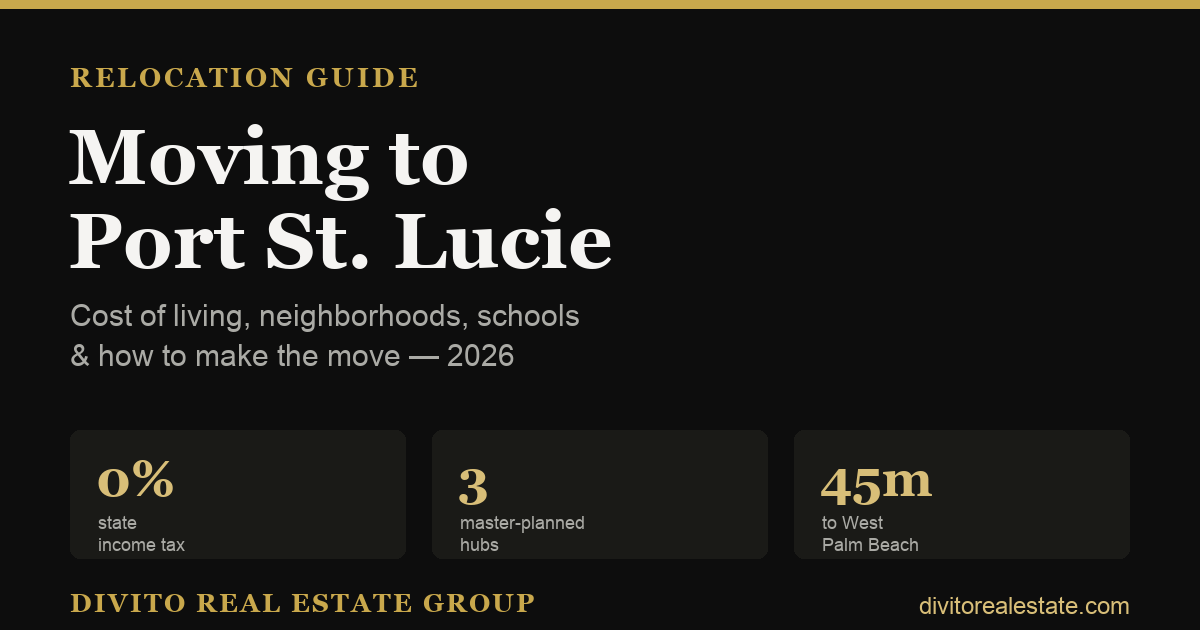
Florida has no state income tax, and property taxes on a primary residence are softened by the homestead exemption and the Save Our Homes cap, which limits how fast your assessed value can rise. Estimate yours with our property tax estimator. Note that taxes typically reset closer to market value the year after a purchase — something to budget for.
Insurance: The Florida Wild Card
Home and, in many areas, flood insurance are where Florida budgets surprise newcomers. Premiums vary widely by home age, roof, location, and flood zone. The move here is simple: get quotes at the contract stage, not the week of closing, so there are no shocks. An older roof is the #1 reason coverage gets expensive or hard to bind.
Want a Real Monthly Cost Estimate?
Tell us your target area and budget and a Divito Real Estate agent will send a realistic all-in cost breakdown for Port St. Lucie.
HOA, CDD & Everyday Costs
Many PSL communities carry an HOA (amenities, sometimes lawn/cable/internet) and a CDD assessment on the tax bill that repays community infrastructure. Confirm both before you buy. Everyday costs — groceries, utilities, gas — run near or below Florida averages, and the lack of state income tax helps your take-home go further.
Putting It All Together
A realistic PSL budget = mortgage + property taxes + home/flood insurance + HOA/CDD + everyday living. The good news: with no income tax and lower home prices, many buyers relocating from the Northeast or from South Florida find their dollar stretches noticeably further here. We'll help you pressure-test the full number before you commit.
The bottom-line advantage
Between no state income tax, the homestead/Save Our Homes tax cap, and lower home prices than South Florida, Port St. Lucie can meaningfully lower your cost of living — as long as you budget for insurance and HOA/CDD up front.
The Bottom Line
Port St. Lucie's affordability is real, but it rewards planning: housing, taxes, insurance, and HOA/CDD all belong in your number. Get those right and PSL is one of the best cost-of-living values on Florida's coast. We'll help you build an honest budget before you buy.
Let's Build Your PSL Budget
Get a realistic, all-in cost breakdown for the neighborhoods you're considering — free and no pressure.
Related Reading

Frequently Asked Questions
Compared to South Florida (Palm Beach, Broward, Miami-Dade), yes — home prices are generally lower and there's no state income tax. Your all-in cost still depends on property taxes, home and flood insurance, and any HOA/CDD fees.
They vary by assessed value and millage, but a primary residence benefits from the homestead exemption and the Save Our Homes cap, which lowers and stabilizes taxes over time. Use our property tax estimator for a ballpark, and expect taxes to reset closer to market value the year after purchase.
Premiums reflect hurricane and flood risk, home age, roof condition, and location. Older roofs are the top reason coverage is costly or hard to bind. Getting quotes early — at the contract stage — avoids surprises.
A Community Development District (CDD) assessment appears on your tax bill and repays the bonds that funded community infrastructure (roads, utilities, amenities). It's separate from HOA dues — confirm both amounts before buying.